
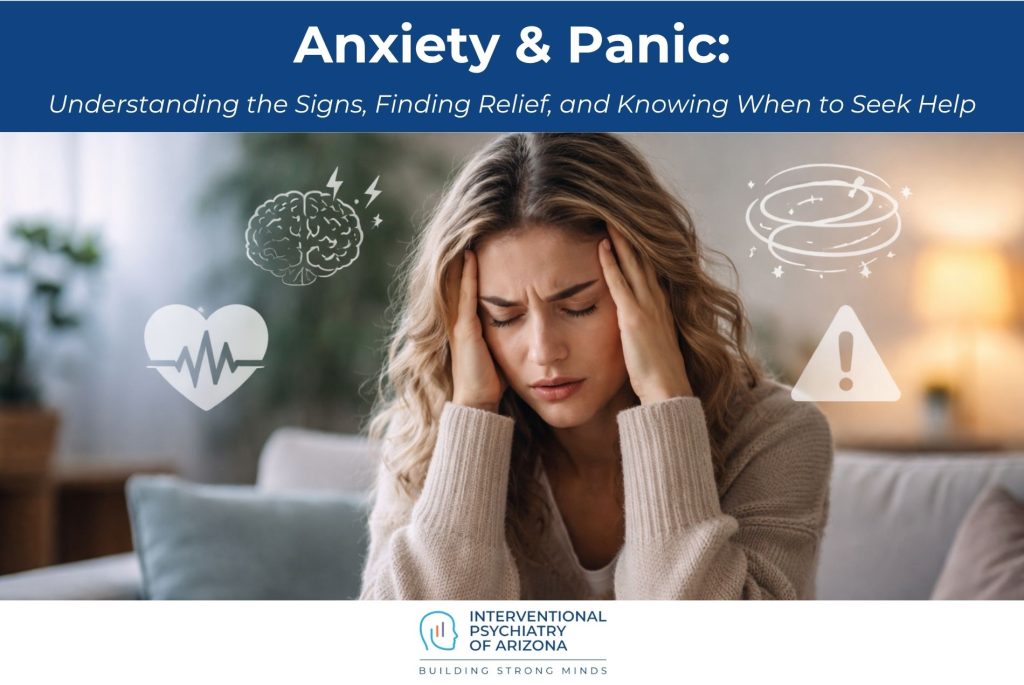
Anxiety and panic disorders are among the most common mental health conditions in the United States—and also among the most misunderstood. For many people, anxiety doesn’t just feel like stress. It can be overwhelming, disruptive, and even physically alarming. If you’ve ever wondered whether what you’re experiencing is “just anxiety” or something more serious, you’re not alone.
At Interventional Psychiatry of Arizona, we specialize in helping individuals move beyond anxiety and panic using advanced, evidence-based treatments tailored to each person’s needs.
What Is Anxiety—and When Does It Become a Problem?
Anxiety is a natural response to stress or perceived danger. It becomes a problem when it is:
- Persistent (lasting weeks or months)
- Disproportionate to the situation
- Interfering with daily life (work, relationships, sleep)
- Accompanied by physical symptoms like racing heart, dizziness, or chest pain
Common anxiety disorders include:
- Generalized Anxiety Disorder (GAD)
- Panic Disorder
- Social Anxiety Disorder
- Phobias
Panic Attacks: Why They Feel So Intense
A panic attack is a sudden surge of intense fear or discomfort that peaks within minutes. Symptoms can include:
- Rapid heartbeat or palpitations
- Shortness of breath
- Chest pain or tightness
- Sweating or chills
- Dizziness or lightheadedness
- Fear of losing control or dying
Because these symptoms mimic serious medical conditions like heart attacks, many people end up in emergency rooms before realizing it’s panic-related.
“Am I Having Anxiety or Something More Serious?”
This is one of the most common—and important—questions.
It might be anxiety if:
- Symptoms come and go in waves
- Medical tests come back normal
- Episodes are triggered by stress or fear
- You’ve experienced similar episodes before
It could be something more serious if:
- Symptoms are new and severe
- Pain radiates to arm/jaw (possible cardiac issue)
- You have underlying medical conditions
- Episodes occur without any pattern or warning
Important: When in doubt, always rule out medical causes first. Once cleared, mental health treatment can address the root cause effectively.
How to Stop a Panic Attack in 60 Seconds
While panic attacks can feel uncontrollable, there are techniques that can quickly reduce their intensity:
1. Ground Your Breathing
- Inhale for 4 seconds
- Hold for 4 seconds
- Exhale for 6–8 seconds
Repeat for 1–2 minutes
2. Use the 5-4-3-2-1 Technique
Identify:
- 5 things you see
- 4 things you feel
- 3 things you hear
- 2 things you smell
- 1 thing you taste
This helps shift your brain out of panic mode.
3. Remind Yourself:
“This is uncomfortable, but not dangerous. It will pass.”
4. Engage Your Body
- Splash cold water on your face
- Hold an ice cube
- Take a short walk
These techniques activate your nervous system in a calming way.
High-Functioning Anxiety: The Signs You Might Be Missing
Not all anxiety looks obvious. Many people with high-functioning anxiety appear successful and composed—but internally struggle.
Signs include:
- Overthinking everything
- Difficulty relaxing or “switching off”
- Perfectionism
- Constant worry about performance
- Trouble sleeping
- Feeling like you’re always “on edge”
Because it’s hidden, high-functioning anxiety often goes untreated—but it’s just as impactful.
When to Seek Treatment
You don’t need to wait until things feel unbearable.
Consider professional help if:
- Anxiety affects your daily life
- Panic attacks are frequent or worsening
- You avoid situations due to fear
- Self-help strategies aren’t enough
- You feel emotionally exhausted
Early intervention leads to better outcomes—and faster relief.
Advanced Treatment Options for Anxiety & Panic
At Interventional Psychiatry of Arizona, we go beyond traditional approaches.
Evidence-based treatments may include:
- Medication management
- Ketamine therapy (for treatment-resistant anxiety)
- Transcranial Magnetic Stimulation (TMS)
- Personalized treatment planning
Our goal is not just symptom reduction—but lasting improvement in quality of life.
Anxiety Self-Assessment (Quick Check)
Ask yourself:
- Do I feel anxious most days?
- Do I avoid situations because of fear?
- Do physical symptoms (heart racing, dizziness) occur often?
- Is my sleep affected?
- Do I feel constantly overwhelmed?
If you answered “yes” to several of these, it may be time to explore treatment options.
Frequently Asked Questions (Q&A)
Q: Can anxiety cause physical symptoms that feel like a medical emergency?
A: Yes. Anxiety can mimic serious conditions like heart attacks, including chest pain, shortness of breath, and dizziness.
Q: How long do panic attacks last?
A: Most peak within 10 minutes and resolve within 20–30 minutes, though residual anxiety may linger.
Q: Can anxiety go away on its own?
A: Mild anxiety may improve with lifestyle changes, but persistent or severe anxiety usually requires treatment.
Q: What is the fastest way to calm anxiety?
A: Controlled breathing, grounding techniques, and physical regulation (like cold exposure) can quickly reduce symptoms.
Q: Is high-functioning anxiety a real condition?
A: While not a formal diagnosis, it is widely recognized and can significantly impact well-being.
Q: When should I seek professional help?
A: If anxiety interferes with your daily life, relationships, or work—or if panic attacks are recurring.
Q: Are there effective treatments beyond medication?
A: Yes. Options like TMS and ketamine therapy can be highly effective, especially for treatment-resistant cases.
Take the First Step Toward Relief
You don’t have to manage anxiety or panic alone. With the right support and treatment, relief is possible—and closer than you think.
Contact Information
Interventional Psychiatry of Arizona
📞 Phone: (602) 824-8404
🌠Website: interpsychaz.com