
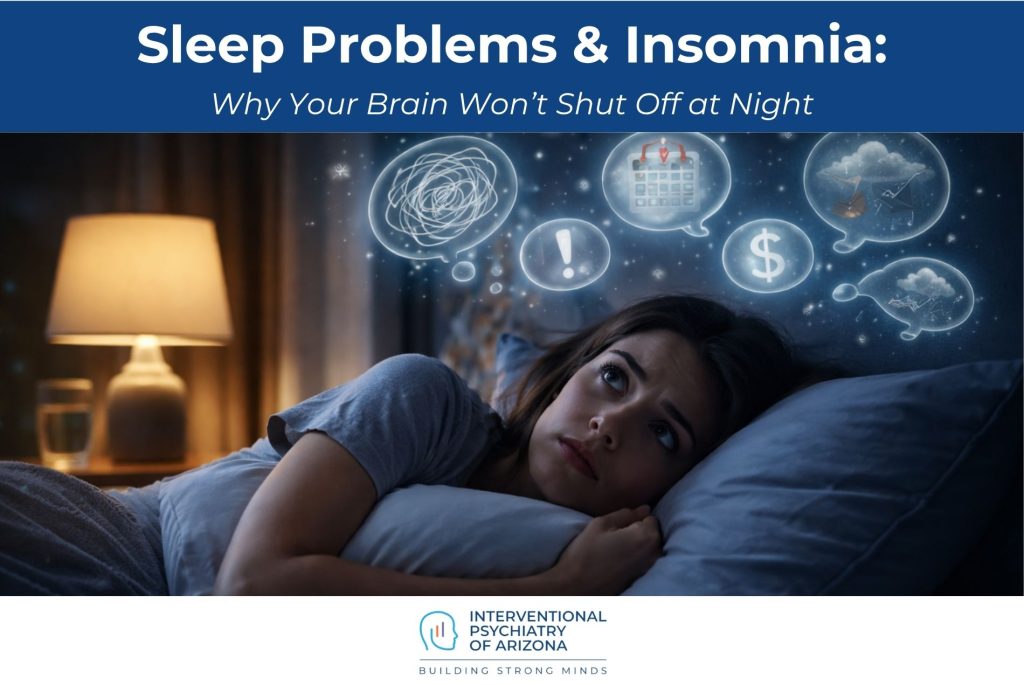
Sleep is supposed to be restorative—a time when your mind and body reset. But for millions of people, bedtime becomes a battleground. Racing thoughts, anxiety, and physical restlessness can make falling (and staying) asleep feel impossible. If you’ve ever wondered why your brain seems most active when your head hits the pillow, you’re not alone—and more importantly, there are effective solutions.
At Interventional Psychiatry of Arizona, we specialize in helping individuals break free from the cycle of insomnia and reclaim healthy, restorative sleep.
Why Your Brain Won’t Shut Off at Night
During the day, your brain is occupied with tasks, conversations, and distractions. At night, when external stimulation fades, your internal world takes center stage.
For many people, this leads to:
- Overthinking and rumination
- Heightened anxiety
- Replaying past events or worrying about the future
- Increased awareness of stress or emotional discomfort
From a neurological standpoint, insomnia is often linked to hyperarousal—a state where the brain remains overly alert instead of transitioning into rest mode. This is especially common in individuals dealing with anxiety, depression, or trauma.
The Anxiety–Insomnia Cycle
Insomnia and anxiety often fuel each other in a frustrating loop:
- Anxiety makes it hard to fall asleep
- Lack of sleep worsens anxiety the next day
- Increased anxiety leads to more sleepless nights
Over time, your brain begins to associate bedtime with stress rather than rest. Even the thought of going to sleep can trigger anxiety, reinforcing the cycle.
This pattern is also closely linked with:
- Post-Traumatic Stress Disorder (PTSD)
- Major Depressive Disorder
- Chronic stress and burnout
Breaking this cycle requires more than just sleep tips—it often requires addressing the underlying mental health factors.
Medications vs. Natural Sleep Strategies
Many people turn to sleep medications for relief. While they can be helpful short-term, they’re not always a long-term solution.
Medications
Pros:
- Fast-acting relief
- Helpful during acute insomnia episodes
Cons:
- Risk of dependence
- Reduced effectiveness over time
- Potential side effects (grogginess, memory issues)
Natural & Behavioral Strategies
Examples include:
- Cognitive Behavioral Therapy for Insomnia (CBT-I)
- Mindfulness and relaxation techniques
- Sleep hygiene improvements (consistent schedule, limiting screens)
- Stress management practices
Pros:
- Long-term effectiveness
- No medication side effects
- Addresses root causes
Cons:
- Takes time and consistency
- May not be enough for severe cases
Interventional Psychiatry: A Modern Approach
When traditional methods aren’t enough, advanced treatments can make a significant difference.
At Interventional Psychiatry of Arizona, we offer evidence-based options such as:
- Transcranial Magnetic Stimulation (TMS)
- Ketamine therapy
- Medication optimization and psychiatric care
These treatments target the underlying brain circuits involved in mood, anxiety, and sleep—helping restore balance and improve overall well-being.
Why Treating Insomnia Matters
Chronic insomnia is more than just an inconvenience—it impacts nearly every aspect of life:
- Mood and emotional regulation
- Memory and concentration
- Physical health (immune function, heart health)
- Work performance and relationships
It’s also often the first sign of deeper mental health concerns, making it an important entry point for care.
Q&A: Sleep Problems & Insomnia
Q: Why do I feel more anxious at night?
A: At night, there are fewer distractions, allowing worries and intrusive thoughts to surface. Additionally, fatigue can lower your ability to regulate emotions, making anxiety feel more intense.
Q: How much sleep do I actually need?
A: Most adults need 7–9 hours of sleep per night, though individual needs vary. Quality matters just as much as quantity.
Q: Is it bad to rely on sleep medication?
A: Occasional use can be helpful, but long-term reliance may lead to tolerance and dependency. It’s best to use medication under the guidance of a qualified provider.
Q: What is the anxiety–insomnia cycle?
A: It’s a loop where anxiety prevents sleep, and lack of sleep worsens anxiety. Over time, this can become a chronic pattern without proper intervention.
Q: When should I seek professional help?
A: If you’ve had trouble sleeping for more than a few weeks, or if insomnia is affecting your daily life, mood, or functioning, it’s time to seek help.
Q: Can treating anxiety or depression improve sleep?
A: Absolutely. Since these conditions are closely linked, addressing the underlying mental health issue often leads to better sleep.
Q: What treatments are available if therapy and sleep hygiene don’t work?
A: Advanced options like TMS and ketamine therapy can help regulate brain activity and improve both mood and sleep, especially in treatment-resistant cases.
Take the First Step Toward Better Sleep
If your nights are filled with racing thoughts and restless hours, you don’t have to manage it alone. Effective, science-backed treatments are available—and relief is possible.
Contact Information
Interventional Psychiatry of Arizona
📞 Phone: (602) 824-8404
🌠Website: interpsychaz.com