
Quick Answer: Does TMS Therapy Work for Anxiety?
Yes, clinical evidence confirms that Transcranial Magnetic Stimulation (TMS) therapy works effectively for anxiety disorders. Randomized controlled trials demonstrate that 60% to 70% of patients experience significant symptom reduction or complete remission from anxiety—particularly those struggling with Generalized Anxiety Disorder (GAD), anxious depression, panic disorder, and treatment-resistant symptoms.
- The Neurological Mechanism: Anxiety stems from hyperactivity in the right dorsolateral prefrontal cortex (R-DLPFC) and an overstimulated limbic system (amygdala). TMS uses targeted magnetic pulses to calm this neurological overactivity and restore balanced emotional regulation.
- Non-Drug & Non-Systemic: Unlike benzodiazepines or daily antidepressants (SSRIs/SNRIs), TMS is non-invasive, does not cause sedation, memory fog, emotional blunting, weight gain, or sexual dysfunction, and involves zero downtime.
- FDA Status & Indications: TMS is FDA-cleared for Major Depressive Disorder (MDD) with comorbid anxiety symptoms, Obsessive-Compulsive Disorder (OCD), and MDD. Specialized inhibitory protocols are also widely utilized by leading psychiatric centers for standalone anxiety disorders.
Living with chronic anxiety feels like your brain’s alarm system is permanently stuck in overdrive. Racing thoughts, tight chest pressure, sudden panic attacks, insomnia, and an unshakable sense of dread can disrupt every aspect of work, relationships, and physical well-being. For millions of individuals, standard frontline interventions like SSRIs, SNRIs, or sedating medications fail to provide adequate relief—or introduce debilitating side effects such as fatigue, weight fluctuations, and cognitive dulling.
When prescription medications and traditional talk therapy reach their limits, many patients explore cutting-edge interventional treatments and ask: does TMS therapy work for anxiety?
At Interventional Psychiatry of Arizona, we specialize in advanced, evidence-based neuromodulation therapies across Phoenix, Scottsdale, Tempe, and Glendale. Below, we provide an in-depth clinical review of how Transcranial Magnetic Stimulation (TMS) works for anxiety disorders, examine peer-reviewed success rates, contrast TMS with conventional medications, and explain what patients can expect during treatment.
What Is Transcranial Magnetic Stimulation (TMS)?
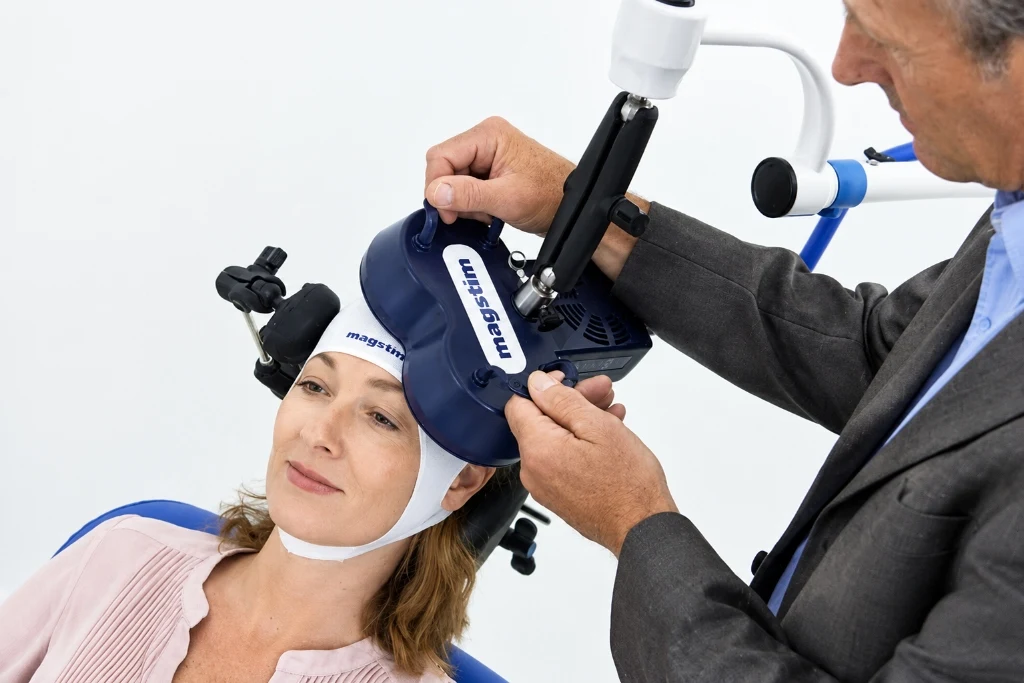
Transcranial Magnetic Stimulation is an FDA-cleared, non-invasive neuromodulation technology that uses focused, MRI-strength electromagnetic pulses to stimulate or inhibit specific regions of the cerebral cortex. During a session, an electromagnetic coil is positioned gently against the patient’s scalp. This coil delivers precise magnetic fields that pass painlessly through the skull to induce localized electrical micro-currents in targeted neural circuits.
Originally cleared by the U.S. Food and Drug Administration in 2008 for treatment-resistant depression, clinical research quickly revealed that TMS also produces profound therapeutic improvements for anxiety disorders, phobias, and panic conditions. Because TMS directly recalibrates the electrical firing patterns of hyperactive neural pathways, it addresses the biological origin of anxiety without circulating systemic chemicals throughout the bloodstream or digestive tract.
To explore our comprehensive clinical equipment and neuromodulation offerings, visit our dedicated TMS Therapy Service Page.
How Does TMS Treat Anxiety? The Brain Circuitry Behind Calm
To understand why TMS therapy works for anxiety, it helps to understand what happens inside the anxious brain. Anxiety is not simply "worrying too much" or a psychological weakness—it is a functional neurocircuitry imbalance involving the prefrontal cortex, the limbic system, and the autonomic nervous system.
1. Prefrontal Cortical Asymmetry (Left vs. Right DLPFC)
Neuroimaging studies demonstrate that emotional regulation relies heavily on the dorsolateral prefrontal cortex (DLPFC). In healthy individuals, the left and right hemispheres maintain dynamic equilibrium. However, in patients suffering from severe anxiety and depression:
- Left DLPFC Underactivity: The left hemisphere controls positive mood, motivation, and executive decision-making. Sluggish activity here correlates with depressive despair and cognitive fatigue.
- Right DLPFC Hyperactivity: The right hemisphere governs hypervigilance, threat detection, and avoidance behavior. When hyperactive, it generates uncontrollable worry, obsessive rumination, and somatic panic sensations.
2. Down-Regulating the Overactive Amygdala
The amygdala is the brain's emotional threat center. In chronic anxiety disorders, the amygdala fires continuously, flooding the body with cortisol and adrenaline via the hypothalamic-pituitary-adrenal (HPA) axis. By applying low-frequency (1 Hz) inhibitory rTMS to the right DLPFC or high-frequency (10 Hz) excitatory rTMS to the left DLPFC, clinicians can quiet the hyperactive cortex and restore top-down prefrontal inhibitory control over the amygdala. This calms the body's chronic fight-or-flight response at its root.
3. Inducing Long-Term Neuroplasticity and Synaptic Remodeling
Unlike daily sedatives that merely mask symptoms temporarily, TMS stimulates the release of Brain-Derived Neurotrophic Factor (BDNF). This initiates long-term potentiation (LTP)—physically strengthening healthy neural synapses and rewiring dysregulated circuits. As these pathways heal, the brain regains its natural capacity to process stress calmly and adaptively.
Struggling with Severe or Medication-Resistant Anxiety?
You don't have to navigate constant dread or uncomfortable medication side effects alone. At Interventional Psychiatry of Arizona, our board-certified psychiatric team designs personalized TMS protocols to help you reclaim calm, mental clarity, and emotional balance. Explore Our TMS Therapy Services →
Clinical Success Rates: What Does the Research Say?
Over the past two decades, dozens of published clinical trials have evaluated the efficacy of Transcranial Magnetic Stimulation across various anxiety diagnoses. The clinical consensus is overwhelmingly positive:
| Anxiety Condition | TMS Protocol & Target | Clinical Response Rate | Observed Patient Outcomes |
|---|---|---|---|
| Generalized Anxiety Disorder (GAD) | Low-Frequency (1 Hz) Right DLPFC | 62% – 68% | Marked reduction in GAD-7 scores, diminished muscle tension, and elimination of chronic catastrophic worry. |
| MDD with Anxious Distress (Anxious Depression) | High-Frequency (10 Hz) Left DLPFC or Bilateral | 65% – 72% | Significant concurrent drop in both Hamilton Anxiety (HAM-A) and Hamilton Depression (HAM-D) rating scales. |
| Panic Disorder & Agoraphobia | Inhibitory Right Frontal Cortex | 58% – 65% | Sharp reduction in frequency and intensity of acute panic episodes; restoration of situational mobility. |
| Post-Traumatic Stress Disorder (PTSD) | Right DLPFC / Medial Prefrontal Cortex | 55% – 64% | Down-regulation of hyperarousal, reduced flashbacks, and improved sleep architecture. See our guide on PTSD and memory recovery. |
| Obsessive-Compulsive Disorder (OCD) | Deep TMS (dDLPFC & Anterior Cingulate Cortex) | 58% – 62% | Clinically meaningful reduction in Yale-Brown Obsessive Compulsive Scale (Y-BOCS) compulsion scores. |
A landmark meta-analysis reviewing non-invasive brain stimulation for generalized anxiety found that low-frequency rTMS directed to the right prefrontal cortex yielded rapid, statistically significant improvements compared to sham treatment. Furthermore, patients treated for comorbid depression and anxiety experienced an average 50% or greater symptom reduction by week 4 of therapy.
TMS vs. Traditional Anxiety Medications: Key Differences
When comparing treatment options, it is helpful to look at how TMS differs from first-line psychiatric pharmaceuticals:
- No Systemic Drug Side Effects: Antidepressants (such as Lexapro, Zoloft, or Effexor) circulate throughout the entire body, frequently leading to nausea, weight gain, fatigue, emotional numbness, and sexual dysfunction. In contrast, TMS is completely localized to the scalp and brain.
- No Dependence or Tolerance Risks: Benzodiazepines (such as Xanax, Ativan, or Klonopin) carry high risks of tolerance, cognitive blunting, and chemical dependence. TMS has zero addictive potential and does not cause chemical dependency.
- No Sedation or Cognitive Impairment: Following a TMS session, patients do not feel drowsy or "zoned out." You can drive yourself to and from every appointment and immediately return to your normal daily routine.
- Long-Lasting Neurological Durability: While pills stop working the moment you discontinue them, TMS builds lasting structural brain adaptations. As detailed in our clinical article on How Long Does TMS Last?, therapeutic benefits frequently endure for 12 to 24+ months following treatment completion.
| Feature | TMS Therapy | SSRIs / SNRIs | Benzodiazepines |
|---|---|---|---|
| Mechanism | Targeted magnetic pulses to cortical circuits | Systemic neurotransmitter reuptake inhibition | GABA receptor enhancement (central sedation) |
| Systemic Side Effects | None (strictly localized) | Weight gain, sexual dysfunction, insomnia, nausea | Drowsiness, ataxia, brain fog, physical tolerance |
| Addiction Risk | Zero | Low (discontinuation syndrome) | High (tolerance and dependence) |
| Durability After Course | Sustained (1 to 2+ years via neuroplasticity) | Relapses often occur upon stopping | Temporary (wears off in hours) |
| Daily Functioning | No downtime; drive immediately | Normal (after adjustment period) | Impaired reflexes, driving caution required |
What to Expect During a TMS Treatment Protocol for Anxiety
Knowing what happens during treatment can alleviate any anticipatory worry. Here is a clear overview of the clinical journey at Interventional Psychiatry of Arizona:
1. Initial Comprehensive Psychiatric Evaluation & Brain Mapping
Before your first treatment, our psychiatric physician conducts a detailed assessment of your medical history, anxiety symptoms, previous medications, and treatment goals. During the initial "mapping" session, we identify your precise Motor Threshold (MT)—the minimal magnetic field required to twitch your thumb—which establishes your exact therapeutic dosing, and pinpoint the exact coordinates for coil placement over your prefrontal cortex.
2. Daily Treatment Sessions
During each session, you recline comfortably in a specialized treatment armchair. You remain fully awake and alert throughout the entire procedure. The treatment coil delivers rhythmic magnetic pulses that sound and feel like gentle tapping on the scalp. Sessions generally last between 19 and 37 minutes (or 3 to 5 minutes with accelerated theta-burst protocols). Many patients listen to music, watch television, or chat with our compassionate TMS technician.
3. Treatment Course Duration
A standard clinical course consists of 36 total sessions administered over 6 to 9 weeks (typically 5 sessions per week for 6 weeks, followed by a gradual 3-week taper). For a full breakdown of schedules and treatment frequency, review our guide on How Many Sessions of TMS Are Needed?.
4. Side Effects: What Are the Sensations?
TMS is remarkably well-tolerated. The most common side effect is mild scalp tenderness or a light tension headache during the first 1 to 2 weeks of treatment, which resolves quickly with over-the-counter pain relievers like acetaminophen or ibuprofen. There is no systemic nausea, no gastrointestinal distress, no sexual dysfunction, and no memory impairment.
Who Is an Ideal Candidate for TMS Therapy for Anxiety?
TMS therapy is particularly beneficial for adults who:
- Have been diagnosed with Generalized Anxiety Disorder (GAD), panic disorder, or social anxiety that has not responded adequately to standard medications or psychotherapy.
- Experience anxious depression (co-occurring major depression and severe anxiety), which represents one of the strongest clinical indications for TMS.
- Experience intolerable side effects from prescription medications, such as severe fatigue, weight gain, brain fog, or emotional numbness.
- Wish to taper off sedatives or benzodiazepines under medical supervision and desire a safe, non-drug neuro-restorative solution.
- Are seeking long-term remission rather than temporary symptom management.
If a patient exhibits treatment-resistant depression with acute anxiety symptoms, our clinic also evaluates eligibility for breakthrough rapid-acting therapies such as Spravato (Esketamine) Nasal Spray and comprehensive personalized medication management.
Is TMS Covered by Insurance for Anxiety?
Insurance coverage is a frequent consideration for patients exploring interventional mental healthcare. Most major insurance providers—including Medicare, Blue Cross Blue Shield, Aetna, Cigna, UnitedHealthcare, and Humana—provide robust coverage for TMS therapy when Major Depressive Disorder (MDD) is present alongside comorbid anxiety symptoms, or for Obsessive-Compulsive Disorder (OCD).
Because depression and anxiety co-occur in up to 70% of psychiatric patients, the vast majority of individuals suffering from debilitating anxiety meet the clinical criteria for insurance-covered TMS. For standalone Generalized Anxiety Disorder (off-label indications), our billing coordinators provide transparent self-pay packages and flexible financing options. To learn more about navigating insurance verification, check our guide on insurance coverage and prior authorization.
Final Thoughts: Comprehensive Anxiety Relief with Personalized Interventional Care
At Interventional Psychiatry of Arizona in Phoenix, we take an integrative, patient-first approach to brain health. We combine state-of-the-art neuronavigated TMS technology with compassionate psychiatric expertise to help you build resilient neural pathways, quiet hyperactive anxiety networks, and achieve lasting emotional calm.
Frequently Asked Questions About TMS Therapy for Anxiety
1. Does TMS therapy work for anxiety?
Yes. Clinical studies demonstrate that Transcranial Magnetic Stimulation (TMS) achieves a 60% to 70% response rate in reducing anxiety symptoms. By delivering targeted magnetic pulses that modulate hyperactive circuitry in the right prefrontal cortex and strengthen regulatory control over the amygdala, TMS calms the body's overactive fight-or-flight response.
2. How quickly does TMS start working for anxiety?
Most patients begin noticing improvements in anxiety symptoms between weeks 2 and 4 (approximately sessions 10 through 20). Early signs often include deeper sleep, less somatic muscle tension, and a reduced frequency of sudden panic spikes, with peak therapeutic benefits consolidating around weeks 5 and 6.
3. Can TMS make anxiety worse?
In rare cases during the initial week of treatment, some patients experience a temporary, mild uptick in anxiety or sensory sensitivity as dormant neural pathways adjust to magnetic stimulation. This phenomenon is transient and readily resolved by adjusting the stimulation parameters or utilizing low-frequency inhibitory protocols on the right prefrontal cortex.
4. Is TMS for anxiety covered by health insurance?
Most commercial insurers and Medicare cover TMS when anxiety co-occurs with Major Depressive Disorder (anxious depression) or Obsessive-Compulsive Disorder (OCD). Because over 70% of patients with severe anxiety also exhibit depressive symptoms, the majority qualify for full insurance coverage. Standalone anxiety protocols may be treated through affordable specialized private-pay arrangements.
5. How many TMS sessions are needed for anxiety?
A standard clinical course consists of 36 sessions. Patients typically attend 5 sessions per week for 6 weeks (30 sessions), followed by a 3-week tapering schedule (6 sessions) to solidify long-term synaptic remodeling and prevent symptom recurrence.
6. How long do the anti-anxiety benefits of TMS last?
Clinical follow-up studies reveal that therapeutic relief typically endures for 12 to 24+ months after completing the full treatment series. Because TMS induces physical neuroplastic remodeling rather than temporary chemical masking, many patients enjoy long-term remission, and brief periodic booster sessions can quickly restore calm if symptoms ever re-emerge.
7. How does TMS compare to benzodiazepines and SSRIs for anxiety?
Unlike benzodiazepines, TMS carries zero risk of physical dependence, tolerance, or addiction. Unlike SSRIs or SNRIs, TMS produces no systemic adverse effects such as weight gain, gastrointestinal upset, sexual dysfunction, or daytime fatigue. Additionally, TMS requires no sedation, enabling patients to drive themselves to appointments and resume normal daily activities immediately.
Ready to Reclaim Your Peace of Mind from Chronic Anxiety?
Persistent anxiety does not have to dictate your future. Discover how non-invasive Transcranial Magnetic Stimulation can quiet an overactive nervous system and help you achieve sustainable, drug-free relief.
Call our clinic today at (602) 824-8404 or submit our confidential appointment request form to verify your insurance benefits and schedule an in-depth consultation with our interventional psychiatric specialists in Phoenix, Arizona.