
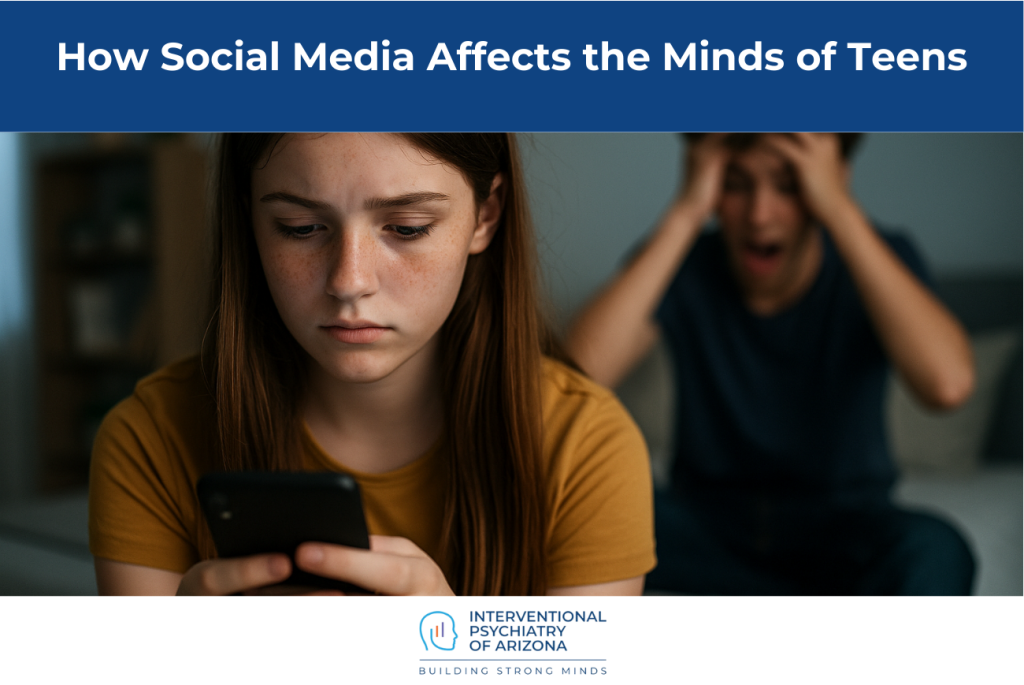
In today’s digital world, social media is nearly inseparable from the lives of teenagers. While it offers opportunities for connection, creativity, and learning, it can also pose risks to mental health and emotional development. Understanding how social media impacts young people is essential for parents, caregivers, and healthcare providers.
At Interventional Psychiatry of Arizona, we see firsthand how digital habits can influence mood, self-esteem, and overall well-being. Let’s explore both the positive and negative effects, along with strategies to foster a healthier relationship with social media.
The Positive Impacts of Social Media
- Connection & Belonging: Teens can connect with peers who share similar interests, cultures, or challenges, reducing feelings of isolation.
- Access to Support: Online communities can provide encouragement, especially for those struggling with mental health or identity issues.
- Creativity & Expression: Platforms offer a stage to share art, music, writing, and ideas, helping teens build confidence.
- Educational Resources: Social media can be a hub of information and awareness, from mental health tips to global news.
The Negative Impacts of Social Media
- Comparison & Low Self-Esteem: Constant exposure to curated images may lead to unrealistic body image standards and feelings of inadequacy.
- Cyberbullying: Harassment and negative comments can severely harm a teen’s mental health.
- Sleep Disruption: Late-night scrolling can interfere with healthy sleep cycles.
- Addictive Use: Dopamine-driven “likes” and notifications may encourage compulsive checking and reduce focus.
- Increased Anxiety & Depression: Studies suggest heavy social media use correlates with higher rates of depression and anxiety among teens.
Healthy Social Media Habits for Teens
- Set Boundaries: Encourage “tech-free” times, such as during meals or before bedtime.
- Encourage Real-World Activities: Sports, hobbies, and in-person friendships help balance screen time.
- Promote Digital Literacy: Teach teens to recognize unrealistic portrayals online.
- Model Healthy Use: Parents who demonstrate balanced screen time set a strong example.
Q&A: Social Media & Teen Mental Health
Q: How do I know if social media is negatively affecting my teen?
A: Warning signs include withdrawal from offline activities, irritability when not online, disrupted sleep, and changes in mood or academic performance.
Q: Can social media actually cause depression or anxiety?
A: While social media alone may not “cause” these conditions, it can amplify existing vulnerabilities, especially through cyberbullying, social comparison, and lack of face-to-face interaction.
Q: Should I take my teen off social media completely?
A: In most cases, balance—not elimination—is key. Social media can have benefits when used mindfully, but reducing time spent on harmful platforms may be necessary.
Q: How can mental health professionals help?
A: Therapists and psychiatrists can help teens build coping strategies, improve self-esteem, and manage stress. In some cases, treatments such as therapy, lifestyle guidance, or advanced interventional psychiatry options may be recommended.
Q: What role do parents play?
A: Parents can open non-judgmental conversations about online experiences, set boundaries, and encourage a healthy balance between digital and real-world activities.
When to Seek Professional Help
If you notice persistent sadness, withdrawal, anxiety, or a decline in your teen’s functioning, it may be time to seek professional support. At Interventional Psychiatry of Arizona, our team provides compassionate, evidence-based care to help families navigate these challenges.
Contact Interventional Psychiatry of Arizona
Interventional Psychiatry of Arizona
Phone: (602) 824-8404
If you are concerned about how social media may be impacting your teen’s mental health, reach out today to schedule a consultation. Together, we can create a path toward balance and well-being.