
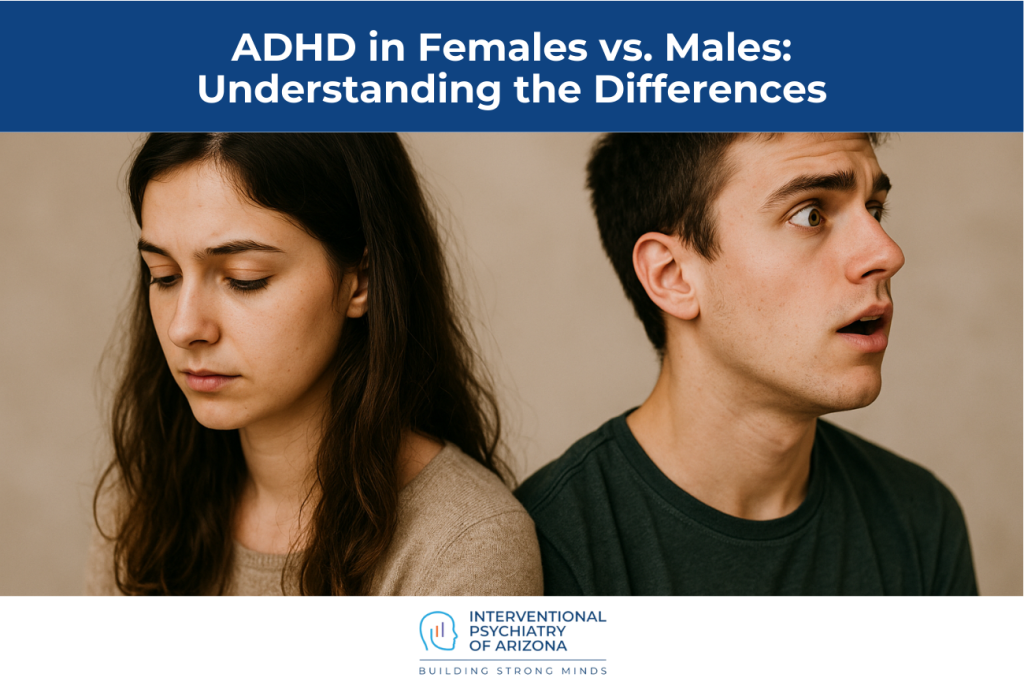
Attention-Deficit/Hyperactivity Disorder (ADHD) is one of the most common neurodevelopmental conditions, affecting people across all ages and backgrounds. However, ADHD often looks different in females compared to males, leading to challenges in diagnosis and treatment. At Interventional Psychiatry of Arizona, we aim to shed light on these differences so families and individuals can better understand the signs, seek timely support, and explore effective treatments.
How ADHD Presents in Males
Boys and men with ADHD are more likely to display the hyperactive-impulsive type of symptoms, which can be easier to recognize. Common features include:
- Frequent restlessness and fidgeting
- Difficulty sitting still or waiting their turn
- Interrupting conversations
- Impulsive decision-making
- Behavioral disruptions in classrooms or workplaces
Because these symptoms are more outwardly visible, males are often diagnosed earlier in childhood.
How ADHD Presents in Females
ADHD in girls and women often appears in the inattentive type, which can be subtle and harder to detect. Common features include:
- Difficulty focusing or sustaining attention
- Forgetfulness and disorganization
- Trouble completing tasks or following through on instructions
- Internalized symptoms such as low self-esteem and anxiety
- Daydreaming rather than disruptive behavior
Unfortunately, many females with ADHD are overlooked until adolescence or adulthood, when the challenges of managing academics, careers, or family life become overwhelming.
Why the Differences Matter
The underdiagnosis of ADHD in females means many go untreated for years. This can contribute to:
- Higher rates of anxiety and depression
- Academic or career struggles
- Difficulty maintaining relationships
- Chronic stress and burnout
Understanding gender-based differences helps providers create personalized treatment plans—including behavioral strategies, therapy, medications, or advanced interventional treatments.
Q&A: ADHD in Females vs. Males
Q: Why are boys often diagnosed earlier than girls?
A: Boys often display more obvious hyperactive and impulsive behaviors, while girls tend to present with less disruptive symptoms, which are more likely to be misattributed to personality traits or mood issues.
Q: Can women still benefit from ADHD treatment if they are diagnosed later in life?
A: Absolutely. Effective treatment at any age can significantly improve focus, organization, emotional well-being, and quality of life.
Q: What treatment options are available for ADHD at Interventional Psychiatry of Arizona?
A: We provide comprehensive evaluations, evidence-based therapies, and advanced interventional approaches to address ADHD symptoms while supporting overall mental health.
Q: How do ADHD symptoms affect daily life differently for men and women?
A: Men may face more behavioral challenges in school or work settings, while women often struggle with internalized issues such as self-doubt, emotional regulation, and managing multiple responsibilities.
Q: What should I do if I suspect I or a loved one has ADHD?
A: Seeking a professional evaluation is the first step. A proper diagnosis opens the door to personalized treatment and support.
Contact Interventional Psychiatry of Arizona
Interventional Psychiatry of Arizona
Phone: (602) 824-8404
If you or someone you love may be struggling with ADHD, contact our office today to schedule a consultation and begin the journey toward better focus and balance.