
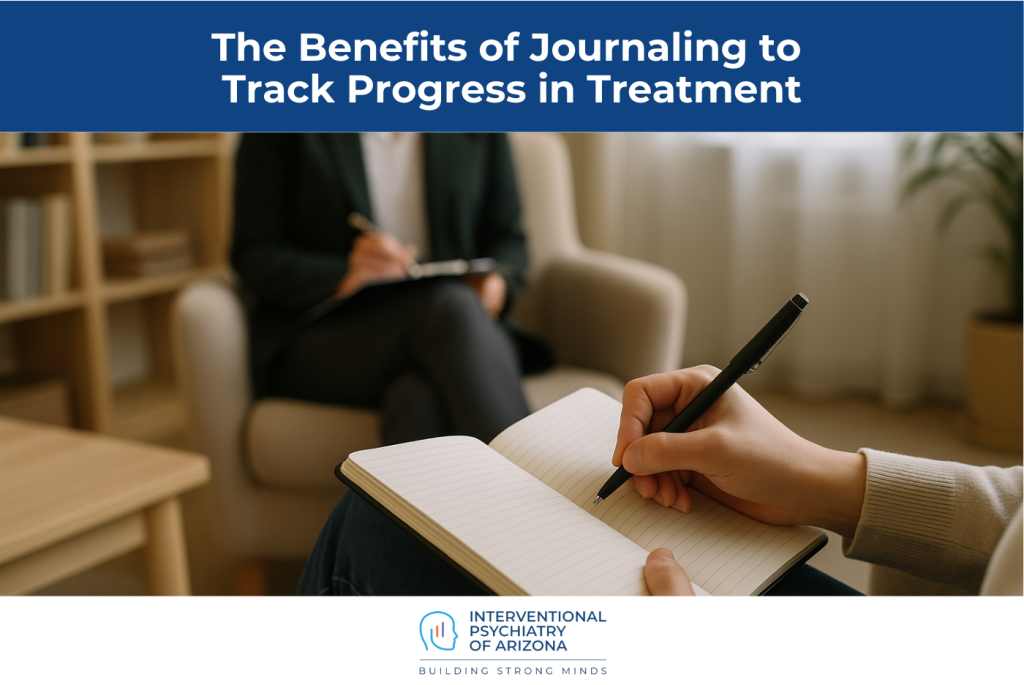
At Interventional Psychiatry of Arizona, we believe that healing is a journey—and keeping track of that journey can be just as important as the treatments themselves. Journaling is a simple, powerful tool that can help teens and adults alike gain perspective, recognize progress, and strengthen communication with mental health providers.
Why Journaling Matters in Mental Health Treatment
When individuals begin therapy, TMS, or medication management, it can sometimes be difficult to recognize gradual improvements or setbacks. Journaling bridges this gap by:
- Providing Clarity: Writing down thoughts and feelings makes it easier to identify emotional patterns and triggers.
- Tracking Progress: Documenting moods, sleep, and daily habits helps patients see subtle but meaningful improvements.
- Improving Communication: Sharing journal entries with a psychiatrist or therapist can highlight details that might otherwise be forgotten in a session.
- Encouraging Reflection: Journaling fosters mindfulness and self-awareness, making it easier to process emotions.
- Supporting Motivation: Noticing growth over time can increase hope and resilience during treatment.
Practical Ways to Journal During Treatment
- Mood Tracking – Rate your mood each day on a scale from 1–10, and note possible reasons for changes.
- Symptom Log – Record sleep patterns, appetite changes, and side effects.
- Gratitude Journaling – Write down three positive things daily to shift focus toward growth.
- Open Reflection – Use free-writing to process difficult experiences.
- Structured Prompts – Answer questions like, “What helped me cope today?” or “What felt harder than usual?”
Q&A: Journaling in Mental Health Treatment
Q: Do I need to be a good writer to keep a journal?
A: Not at all! Journaling is for you—not for anyone else. Even quick notes or bullet points can be effective.
Q: How often should I journal?
A: Consistency matters more than length. Even 5 minutes a day can provide valuable insights.
Q: Should I share my journal with my psychiatrist or therapist?
A: That’s up to you. Many patients find that sharing entries helps their provider better understand their progress, but it’s a personal choice.
Q: Can journaling replace therapy or medication?
A: Journaling is a supportive tool—not a replacement for professional treatment. It works best alongside therapies like TMS, counseling, or medication management.
Q: What if journaling makes me feel worse?
A: For some people, writing about struggles can bring up painful emotions. If that happens, try focusing on gratitude, positive coping strategies, or discuss your concerns with your provider.
Take the Next Step in Your Healing Journey
At Interventional Psychiatry of Arizona, we encourage patients to use every tool available—including journaling—to support their mental health. If you or your loved one are seeking personalized, compassionate care, we are here to help.
Phone: (602) 824-8404