
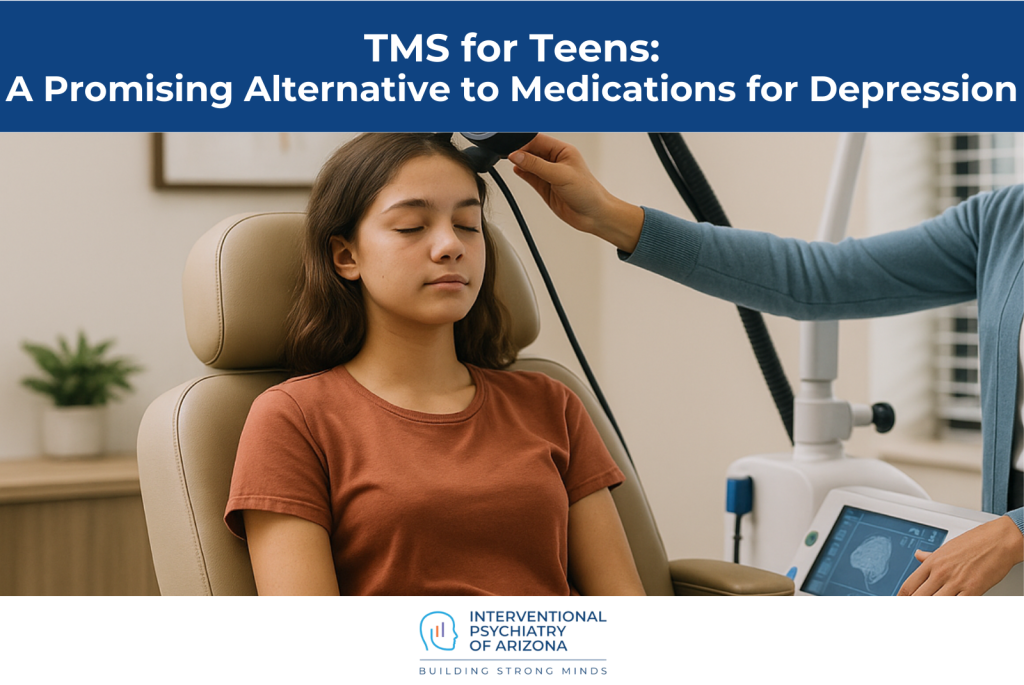
Depression among teens is a growing concern, with many young people struggling to find relief through traditional treatments. While medications can be effective for some, they often come with side effects that are particularly challenging for adolescents. At Interventional Psychiatry of Arizona, we offer Transcranial Magnetic Stimulation (TMS) as an innovative, non-invasive alternative that may help teens manage depression safely and effectively.
What is TMS?
Transcranial Magnetic Stimulation (TMS) is an FDA-approved, non-invasive therapy that uses gentle magnetic pulses to stimulate areas of the brain associated with mood regulation. Unlike medication, TMS does not circulate throughout the body, meaning it avoids systemic side effects such as weight gain, fatigue, or digestive issues.
Why Consider TMS for Teens?
Teens are at a unique stage of development, both physically and emotionally. While antidepressants can provide relief, they may also cause unwanted effects such as sleep disturbances, appetite changes, or emotional blunting. TMS offers:
- Non-invasive care – no needles, anesthesia, or surgery
- Fewer side effects – generally limited to mild scalp discomfort or headaches
- Improved focus and mood – many patients report feeling clearer and more motivated
- Outpatient convenience – treatments are done in-office, and teens can resume school or activities the same day
Q&A: TMS for Teens
Q: Is TMS safe for teenagers?
Yes. While TMS has primarily been studied in adults, emerging research and clinical practice suggest it is safe and effective for adolescents struggling with depression, especially when monitored by a trained psychiatrist.
Q: How does TMS compare to medications?
Medications alter brain chemistry through systemic absorption, which can lead to side effects throughout the body. TMS works locally by stimulating brain regions involved in mood regulation, offering targeted treatment without systemic side effects.
Q: How long does treatment take?
A typical course involves daily sessions, five days per week for 4–6 weeks. Each session lasts about 20–40 minutes.
Q: Will TMS replace therapy or other treatments?
Not necessarily. TMS is often most effective when combined with psychotherapy, healthy lifestyle practices, and sometimes low-dose medication.
Q: What if my teen doesn’t respond to TMS?
Every teen is unique. If TMS alone does not provide enough relief, our psychiatrists may recommend other interventional options or a tailored care plan that best suits your child’s needs.
Q: Does TMS hurt?
Most teens describe the sensation as a tapping or clicking sound on the scalp. Discomfort is mild and usually improves after the first few sessions.
Taking the Next Step
If your teen is struggling with depression and medications are not the right fit, TMS therapy could be a life-changing option. Our compassionate team at Interventional Psychiatry of Arizona is here to help guide you through every step of the process.
Contact Us
Interventional Psychiatry of Arizona
Phone: (602) 824-8404