
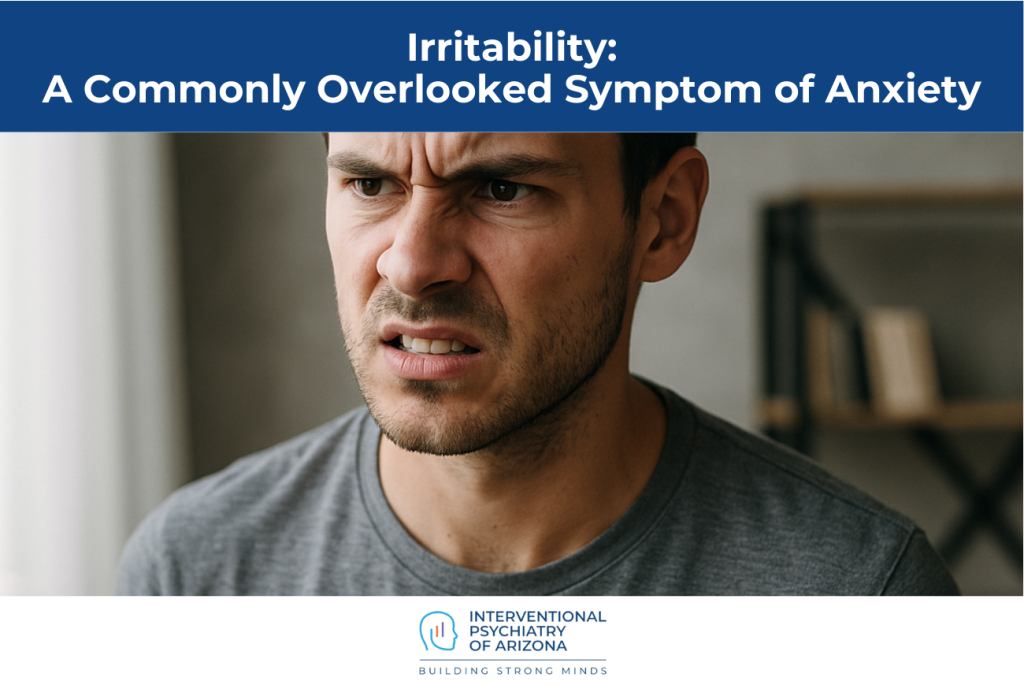
When most people think about anxiety, they picture racing thoughts, a pounding heart, or constant worry. While these symptoms are well-known, one of the most overlooked signs of anxiety is irritability. Many individuals experiencing anxiety find themselves snapping at loved ones, feeling restless, or becoming easily frustrated—even when they don’t necessarily feel “worried.”
At Interventional Psychiatry of Arizona, we believe understanding this connection is essential for early recognition and effective treatment.
Why Irritability Happens with Anxiety
Anxiety activates the body’s fight-or-flight response, leading to a surge of stress hormones. This heightened state of alertness can make a person feel tense, restless, or on edge. Over time, the constant strain can spill over into irritability, making even small inconveniences feel overwhelming.
Common contributing factors include:
- Sleep disturbances – Anxiety often disrupts sleep, which amplifies mood swings.
- Cognitive overload – Worrying consumes mental energy, leaving little room for patience.
- Physical tension – Tight muscles and restlessness can translate into short-tempered behavior.
The Impact of Untreated Irritability
Ignoring irritability linked to anxiety can have lasting consequences. Relationships may suffer, work performance may decline, and overall quality of life can worsen. Many people mistakenly think they simply have a “bad temper” when, in fact, their underlying anxiety is the true cause.
By addressing the root of anxiety, patients often notice improvements not only in their mood but also in their ability to connect and communicate with others calmly.
Q&A: Irritability and Anxiety
Q: Can irritability really be a main sign of anxiety, even without constant worrying?
A: Yes. Some individuals may not recognize traditional anxious thoughts but still live in a state of restlessness and tension. Irritability can be the most noticeable outward symptom of their anxiety.
Q: How can I tell if my irritability is caused by anxiety or something else?
A: A professional evaluation can help. Irritability from anxiety is often accompanied by other signs such as trouble sleeping, muscle tension, difficulty concentrating, or feelings of being “on edge.”
Q: What treatment options help with anxiety-related irritability?
A: Treatments may include psychotherapy, lifestyle strategies such as improved sleep hygiene, mindfulness practices, and in some cases, medications or interventional approaches like TMS (Transcranial Magnetic Stimulation).
Q: Does treating anxiety really reduce irritability?
A: Absolutely. Once anxiety is managed, many patients report greater calmness, more patience, and improved relationships with those around them.
Q: When should I seek professional help?
A: If irritability is frequent, affecting your relationships, or interfering with daily life, it’s time to reach out to a mental health professional.
Take the First Step Toward Relief
If you or someone you love struggles with irritability, it may be a sign of underlying anxiety. The good news is that help is available. At Interventional Psychiatry of Arizona, our compassionate team specializes in advanced treatments tailored to your needs.
Interventional Psychiatry of Arizona
Phone: (602) 824-8404